
Moroccan Traditional Cookware
Traditional Moroccan cookware from the pottery workshops of Fez, Marrakech and Safi: clay tagines for slow-cooked stews, hand-painted serving tagines and brass and silver teapots for Moroccan mint tea.
Shop by type: Moroccan tagine pots · Moroccan teapots · Moroccan pottery
-
 -8% Off
Original price was: $120.$110Current price is: $110.
-8% Off
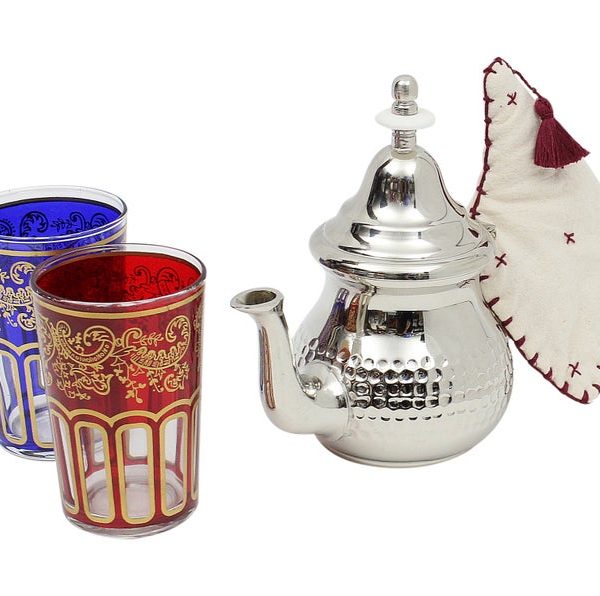
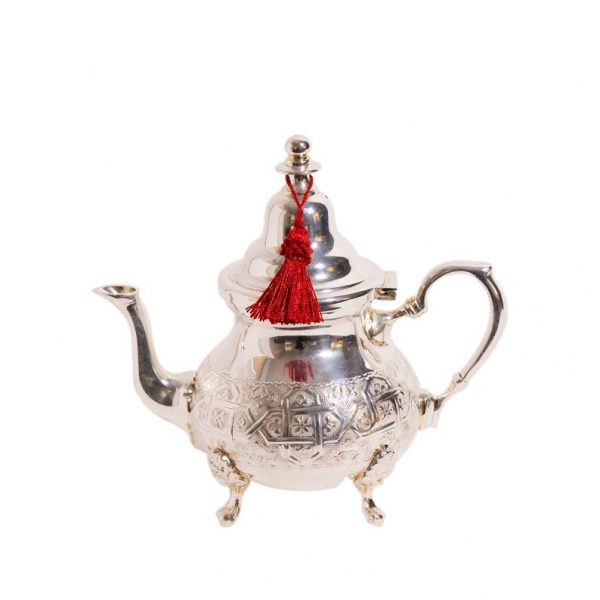
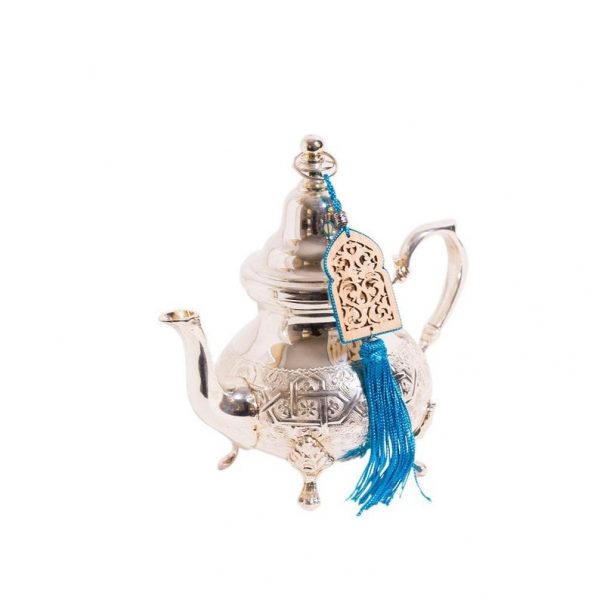
Original price was: $120.$110Current price is: $110.Perfect for serving tea, Antique Solid Silver Teapot For Sale ,The best authentic Moroccan kettle is the silverware designed by artists in the Old City of Fes and decorated in beautiful geometric designs. Small Moroccan teapot with integrated filter, traditional authentic with a classical hammered design, handmade in Morocco with silver Maillechort.
Free Worldwide Shipping
Check Our New Design In Moroccan TeaPot Set
-
 -41% Off
Original price was: $189.$112Current price is: $112.
-41% Off
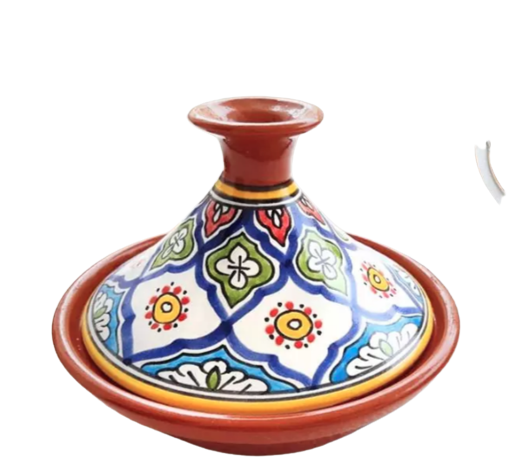
Original price was: $189.$112Current price is: $112.This beautiful Moroccan Clay Tagine was handmade in Morocco, beautifully decorated and hand painted.This intricately painted tagine was hand made by our talented ceramicist, Fethi, out of terracotta clay, which was then painted and glazed.
- This is the Small size, which feeds 1-2 people. There is a small version of this design – please get in contact if you are interested.
FREE WORLDWIDE SHIPPING
-
 -4% Off
Original price was: $89.$85Current price is: $85.
-4% Off
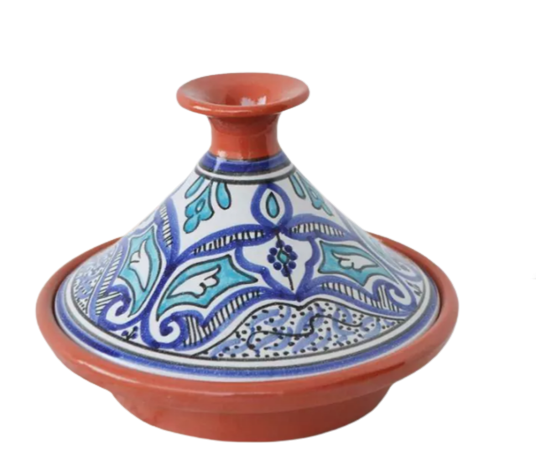
Original price was: $89.$85Current price is: $85.This beautiful Clay Tagine Dish was handmade in Morocco, beautifully decorated and hand painted.This intricately painted tagine was hand made by our talented ceramicist, Fethi, out of terracotta clay, which was then painted and glazed. This is the small size, which feeds 1-2 people. There is a small version of this design – please get in contact if you are interested.
size:20cm diameter x 19 cm high. Dish height 5cm.
FREE WORLDWIDE SHIPPING
-
 -23% Off
Original price was: $155.$120Current price is: $120.
-23% Off
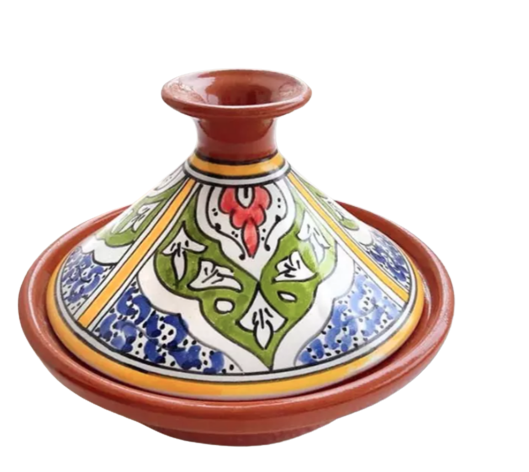
Original price was: $155.$120Current price is: $120.This beautiful Colourful Tagine was handmade in Morocco, beautifully decorated and hand painted.This intricately painted tagine was hand made by our talented ceramicist, Fethi, out of terracotta clay, which was then painted and glazed. This is the small size, which feeds 1-2 people. There is a small version of this design – please get in contact if you are interested.
size:20cm diameter x 19 cm high. Dish height 5cm.
FREE WORLDWIDE SHIPPING
-
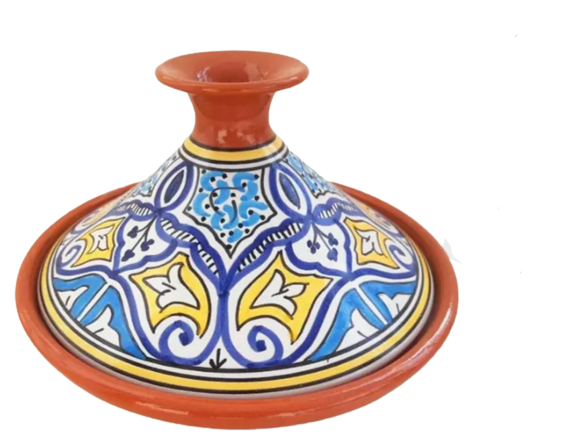 -10% Off
Original price was: $115.$104Current price is: $104.
-10% Off
Original price was: $115.$104Current price is: $104.This beautiful Tagine Clay Pot For Sale was handmade in Morocco, beautifully decorated and hand painted.This intricately painted tagine was hand made by our talented ceramicist, Fethi, out of terracotta clay, which was then painted and glazed. This is the large size, which feeds up to 4 people. There is a small version of this design – please get in contact if you are interested.
- Size:26.5cm diameter 18cm height
FREE WORLDWIDE SHIPPING
-
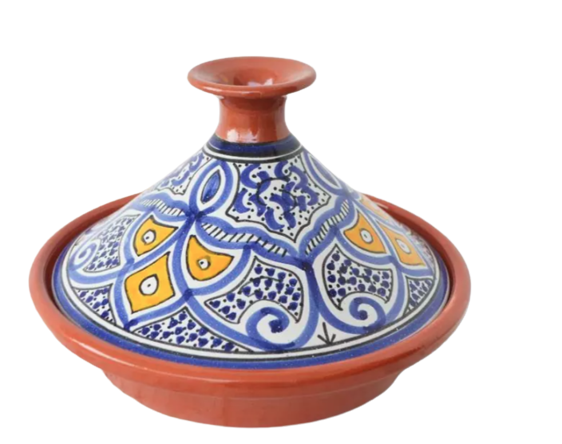 -6% Off
Original price was: $105.$99Current price is: $99.
-6% Off
Original price was: $105.$99Current price is: $99.This beautiful Medium Tagine Pot was handmade in Morocco, beautifully decorated and hand painted.This intricately painted tagine was hand made by our talented ceramicist, Fethi, out of terracotta clay, which was then painted and glazed. This is the large size, which feeds up to 4 people. There is a small version of this design – please get in contact if you are interested.
- size:26.5cm diameter 18cm height
FREE WORLDWIDE SHIPPING
-
-5% Off
Original price was: $115.$109Current price is: $109.
This beautiful Large Hand Painted Tagine Pot was handmade in Morocco, beautifully decorated and hand painted.This intricately painted tagine was hand made by our talented ceramicist, Fethi, out of terracotta clay, which was then painted and glazed. This is the large size, which feeds up to 4 people. There is a small version of this design – please get in contact if you are interested.
- size:33cm diameter 24cm height
FREE WORLDWIDE SHIPPING
-
-5% Off
Original price was: $115.$109Current price is: $109.
This beautiful Pottery Tagine Dish was handmade in Morocco, beautifully decorated and hand painted. Our Tagines are uniquely designed and are handmade following a traditional manufacturing process that goes back to the late 17th century and that lasts for 14 days in total. Yes, you read it right, each single piece takes 2 weeks or 340 hours of work. We resumed the steps for you below:
- size:23 Cm Or 9,05 In | Width: 24 Cm Or 9,44 In
FREE WORLDWIDE SHIPPING
-
-11% Off
Original price was: $55.$49Current price is: $49.
The Traditional Shape, at an Accessible Price
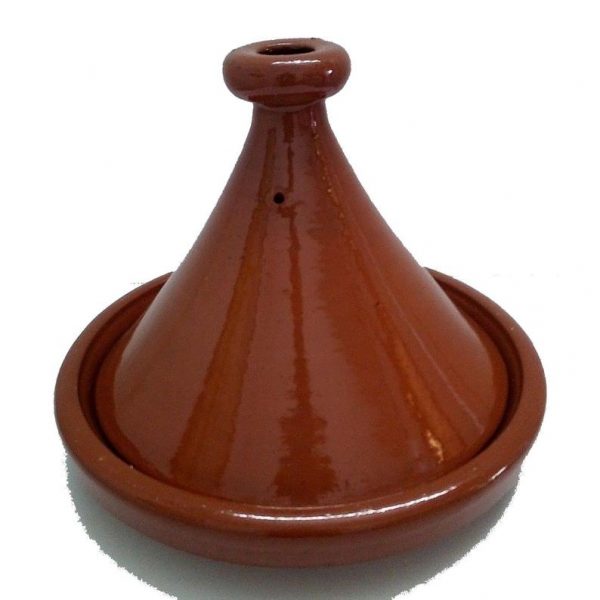
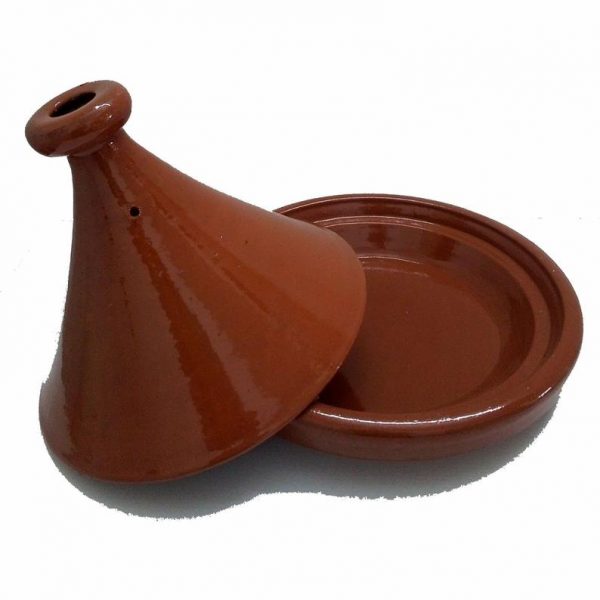
This is the tagine in its most classic, essential form — simple unglazed or lightly finished clay, shaped in the traditional conical silhouette that’s changed very little in generations of Moroccan kitchens. It’s an honest, no-frills entry point into tagine cooking.
Don’t mistake the price for a compromise on the cooking method: the same slow-steam principle applies here as it does in higher-priced pieces, gently returning moisture to the dish as it simmers.
Good to know: a good first tagine if you’re new to clay cooking — season before use, and it will only improve with regular seasoning over time.
-
-36% Off
Original price was: $185.$119Current price is: $119.
Kitchen-Ready, Bohemian at Heart
This tagine splits the difference between functional cookware and decorative statement piece. It’s shaped by hand for genuine stovetop use, but finished with the kind of earthy glaze and organic form that looks just as good sitting out on an open shelf as it does simmering on the stove.
It’s a natural fit for a bohemian or eclectic kitchen — the kind of space where cookware doubles as decor between meals rather than disappearing into a cupboard.
Good to know: season the clay before first use with a water soak and a slow initial heat-up; after that, treat it as a everyday piece rather than a display-only one.
-
- 15 % Off Select options This product has multiple variants. The options may be chosen on the product page Quick ViewPrice range: $176 through $299Are you a fan of authentic Moroccan cooking ? Do you want to taste the authentic Moroccan cooking? You should try the Moroccan Tangia It is really amazing and adds a great taste, all healthy and natural With delivery I’ll teach you how to prepare There is a possibility to send you his spices just let me knowAfter the delivery of tanjia I offer you a special recipe for preparing tanjia>>>>> W have various sizes, small, medium and large smallSelect options This product has multiple variants. The options may be chosen on the product page
-
-9% Off
Original price was: $196.$179Current price is: $179.
A Complete Mint Tea Ritual
Moroccan mint tea is as much ceremony as beverage, and this set is built for exactly that: a silver-plated teapot paired with matching glasses, ready for the traditional high-pour that aerates the tea and builds the characteristic foam on top.
The silver plating gives the set a formal, polished look that suits serving guests, while the glasses are sized for the small, frequent pours that are part of the ritual — tea poured, sipped, and refilled throughout a visit rather than one large cup.
Good to know: hand wash only to protect the silver plating; a lovely gift set for anyone who’s experienced Moroccan hospitality and wants to recreate it at home.
-
-11% Off
Original price was: $256.$229Current price is: $229.
Vintage-Style Brass, Hand-Embossed
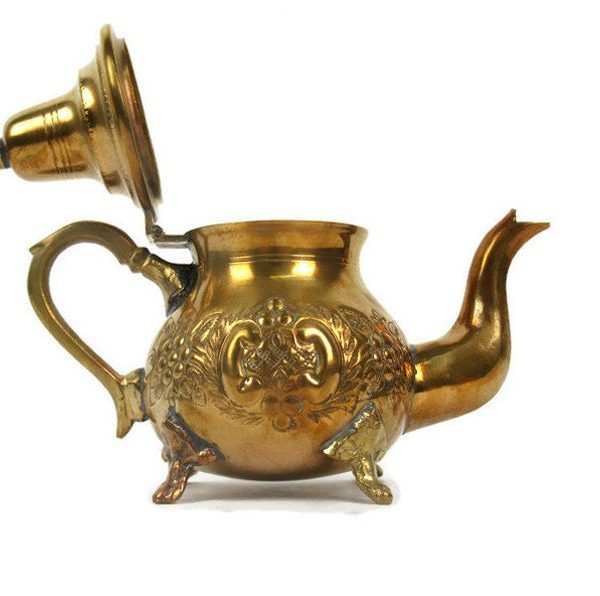
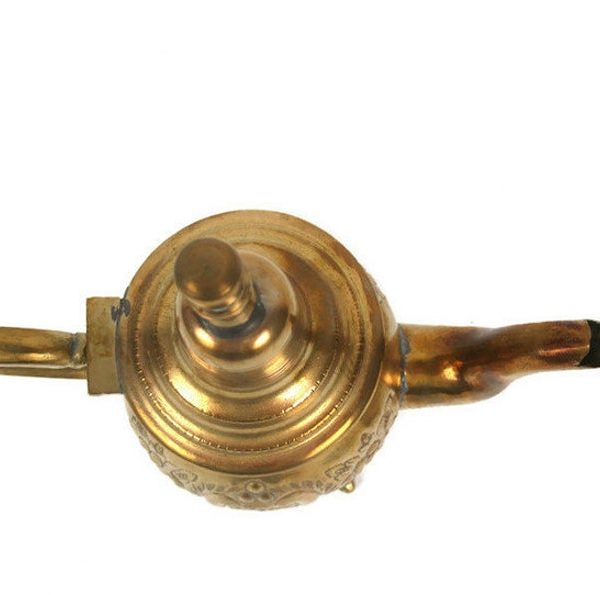
Hand-embossed with the kind of intricate raised patterning that’s become a signature of Moroccan brasswork, this teapot is shaped in a vintage silhouette, complete with decorative legs and a curved handle built for pouring mint tea the traditional way — held high, from a distance.
The embossing is worked by hand into the brass, so light catches the raised pattern differently depending on the angle, giving the piece real depth beyond a flat, printed design.
Good to know: brass will develop a soft patina with use; a light polish restores shine if you prefer it bright, or let it age naturally for a warmer, antique look.
-
-44% Off
Original price was: $199.$112Current price is: $112.
Large Blue Handmade Tagine
Our ceramic cooking pot will make a great kitchen set for any occasion. They can be used to cook casseroles and dishes of all kind. They are also perfect when used as a serving platter for hot food.
- Large SIZING
- Each tagine has a conical top that measures a Height :of 12″ and a base of 12″
FREE WORLDWIDE SHIPPING
-
-6% Off
Original price was: $95.$89Current price is: $89.
An Everyday Taste of Morocco
Handmade in Morocco using traditional clay-forming techniques, this tagine is built as an accessible way into tagine cooking — sized and priced for regular use rather than special-occasion-only. The classic conical lid does the real work, circulating steam back down into the dish as it cooks.
It suits everything from a simple weeknight chicken tagine to slow-cooked vegetables, and its straightforward, traditional shape means it looks equally at home going straight from stovetop to table.
Good to know: season before first use by soaking the clay in water, then heating gradually; this helps prevent cracking and improves heat retention over time.
-
-7% Off
Original price was: $85.$79Current price is: $79.
Hand-Painted by Naman, Djerba
This tagine carries the design tradition of Djerba, the Mediterranean island long known for its distinctive hand-painted ceramics. It’s made and decorated by the artisan Naman, whose brushwork follows patterns passed down through generations of island potters rather than a modern print or stencil.
Each brushstroke is applied freehand, so the exact placement of color and pattern varies slightly from piece to piece — a signature of genuine hand-painted ceramics rather than a flaw.
Good to know: best treated as a decorative and serving piece that celebrates the artist’s design work; well suited to displaying cooked tagine at the table.
-
-11% Off
Original price was: $55.$49Current price is: $49.
Moroccan Tagine Pot To Buy
The product listed here is a vintage Moroccan tagine; a tool being used for cooking in ovens for vegetables and meat or chicken it is highly decorated & painted, Moroccan artisan product
- – Variety of 100% PURE clay, of superior qualities
- Measurement: betwen 10 and 12 inches in diameter
FREE WORLDWIDE SHIPPING
-
-36% Off
Original price was: $175.$112Current price is: $112.
Built for the Stovetop, Not Just the Shelf
This tagine is made to actually cook in — a functional piece of clay cookware shaped and fired using the same low, slow-cooking design that’s turned tagines into Morocco’s signature dish. The conical lid traps steam and returns it to the pot, keeping meat and vegetables tender without needing much liquid.
Before first use, season the clay by soaking it in water for a few hours, then a slow, low-heat cook to help it handle stovetop or oven heat evenly. After that, it’s ready for the kind of long, unhurried simmering tagines are built for.
Good to know: works on gas, electric, and in the oven; avoid sudden temperature changes, which clay cookware doesn’t like.
-
-6% Off
Original price was: $234.$220Current price is: $220.
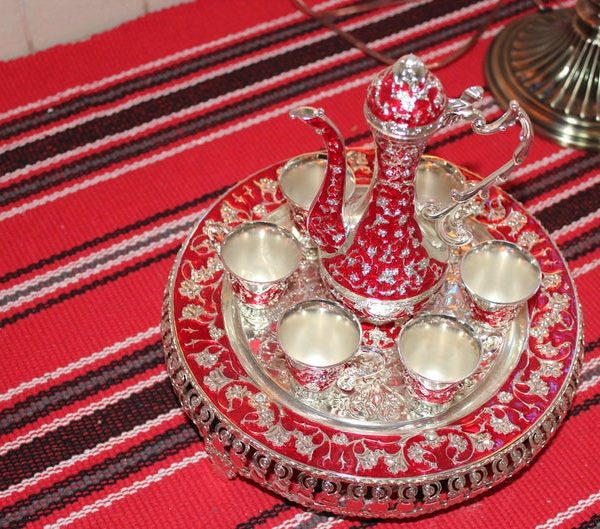
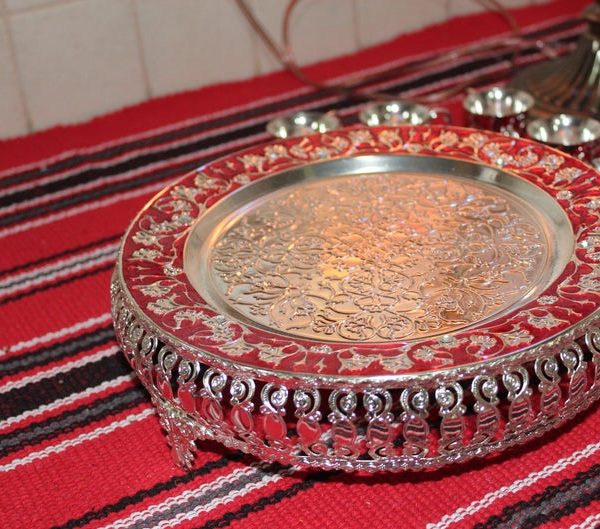
Moroccan Brass Tea Serving Set — Tray, Kettle & 6 Cups
A complete serving set built for Moroccan-style hospitality: a hand-hammered copper-and-brass tray, a matching brass kettle with handle, and six cups, all finished in warm brass and copper tones with silver and red accents.
The tray measures 31cm across, the kettle stands 21cm, and the accompanying plate is 20cm — a set sized to serve tea or coffee to a full table of guests in one round. It’s as suited to display between uses as it is to active serving, with the kind of handmade detail that holds up as a lasting centerpiece.
Good to know: a complete 8-piece set (tray, kettle, and 6 cups) — ready to use straight out of the box, and a striking gift for anyone who loves Moroccan design.
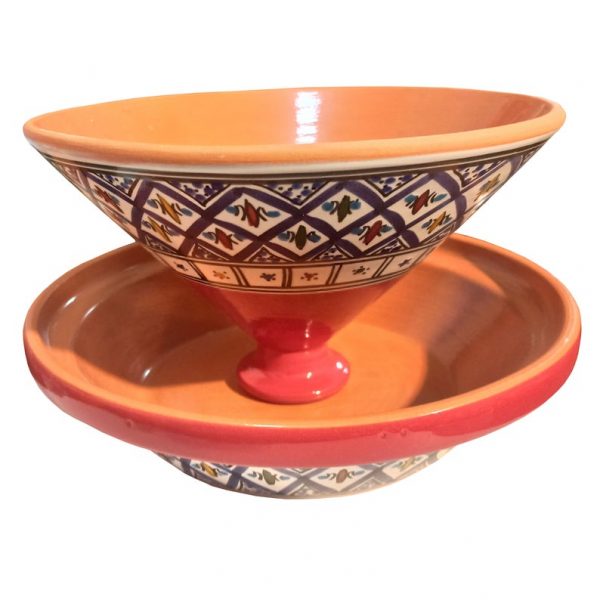

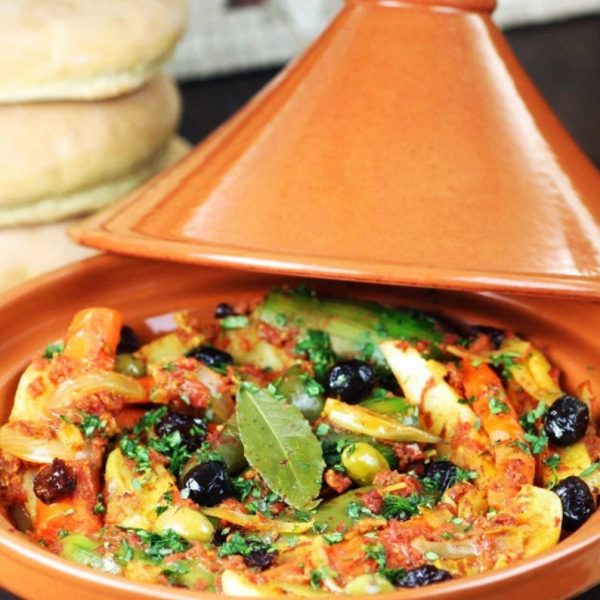
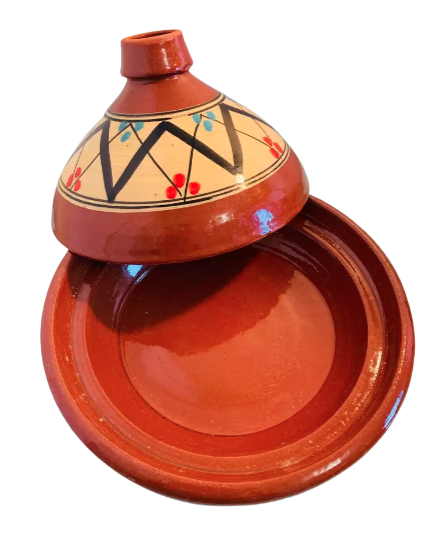
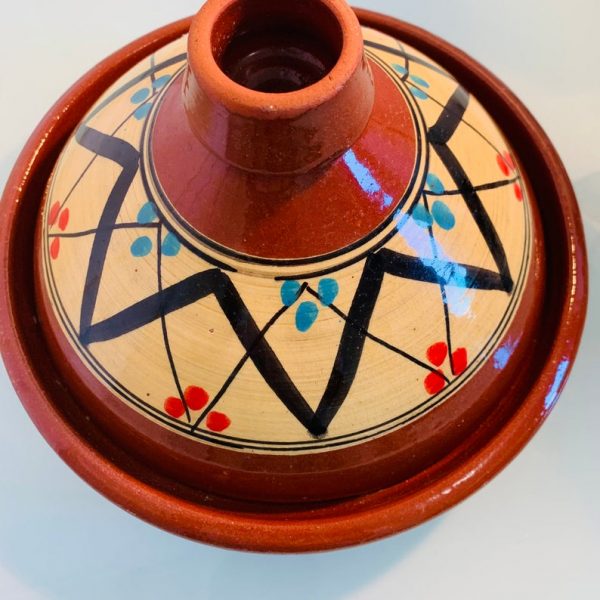
About Moroccan traditional cookware
Moroccan cooking has always been built around a handful of essential pieces, passed down through generations of artisans in the pottery workshops of Fez, Marrakech, and Safi. Our collection of traditional cookware brings those pieces together: hand-shaped clay tagines for slow-cooked stews, hand-painted serving tagines for the table, and brass and silver teapots built for the daily ritual of Moroccan mint tea.
The Moroccan Tagine
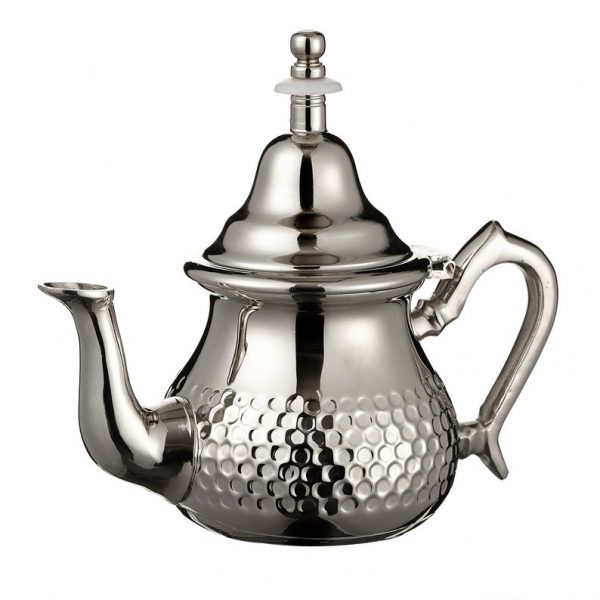
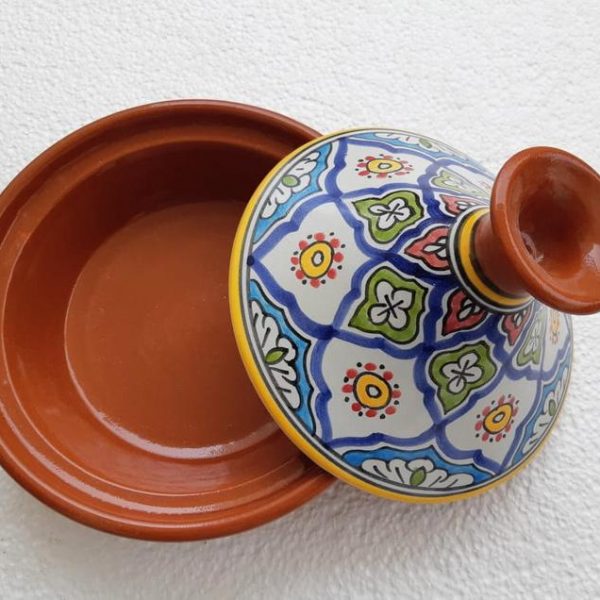
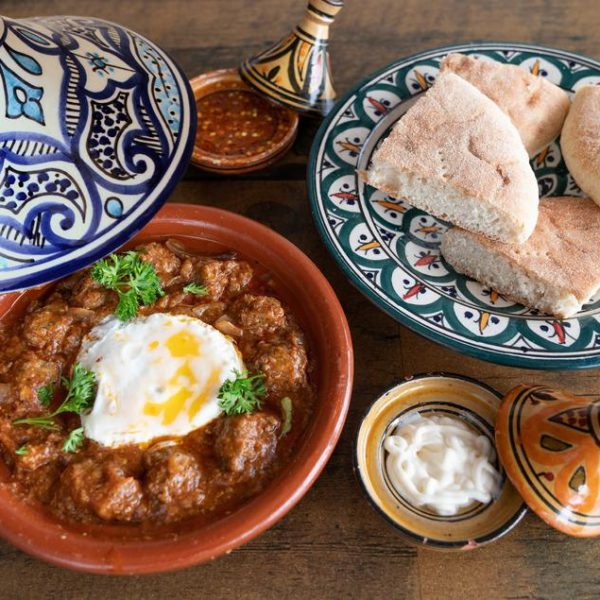
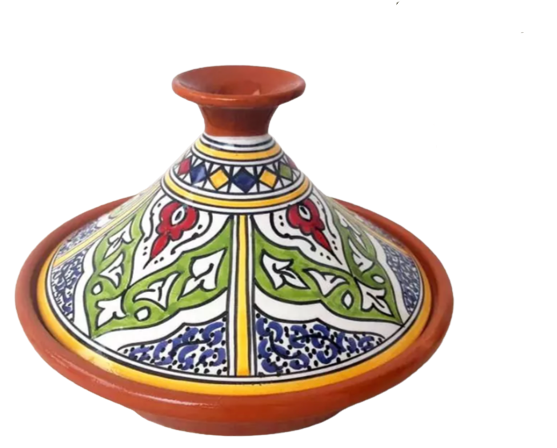
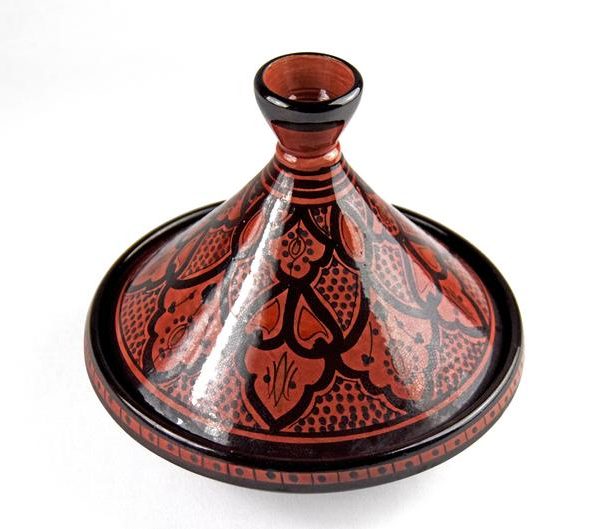
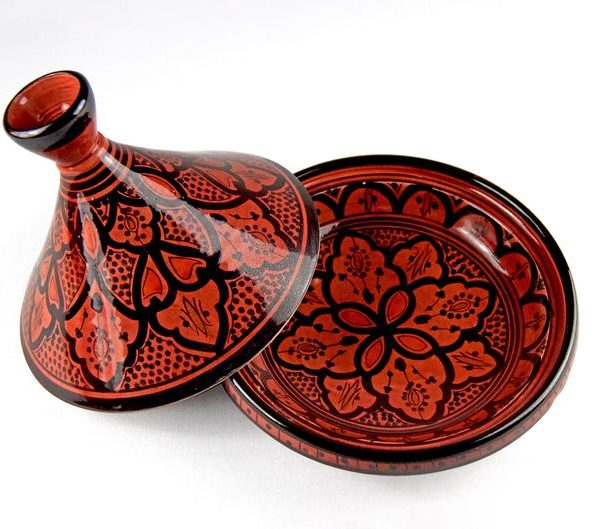
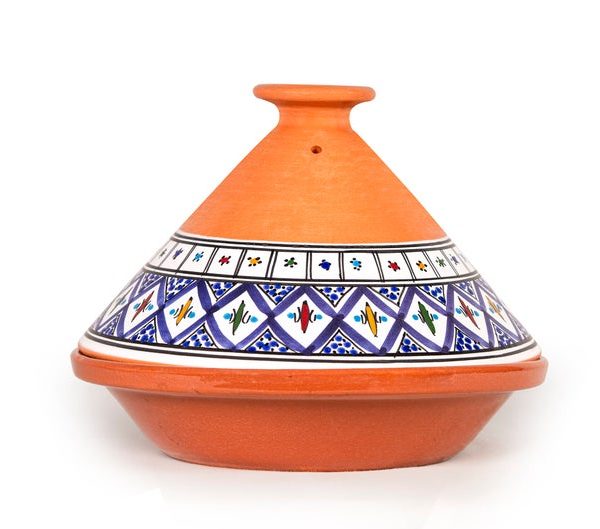
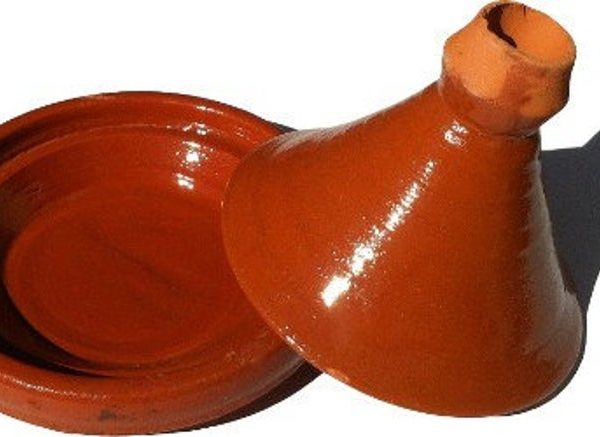
The tagine is the heart of Moroccan cooking, and it gives its name to the dish as much as the pot itself. Shaped from clay and fired using techniques that haven’t changed much in centuries, a tagine’s distinctive conical lid is what makes the cooking method work: as the dish simmers, steam rises, condenses against the cone, and drips back down onto the meat and vegetables below. The result is tender, slow-cooked food using very little added liquid — the same principle whether you’re making a simple vegetable tagine or a slow-braised lamb with preserved lemon and olives.
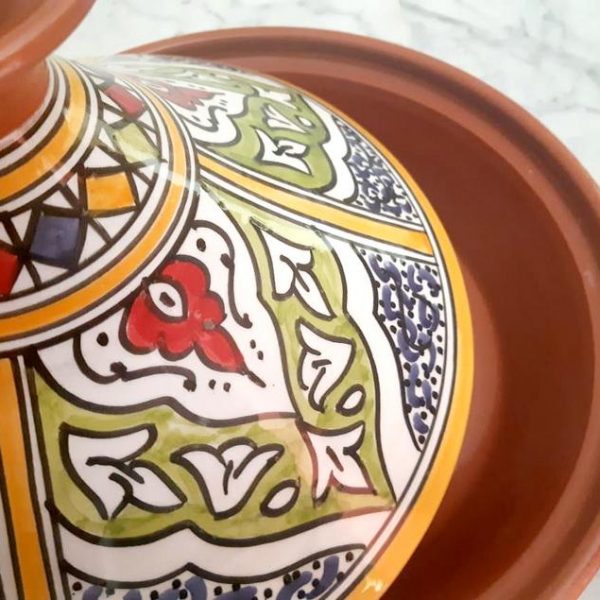
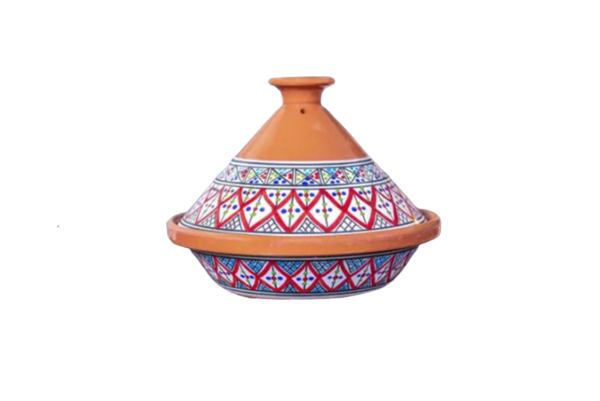
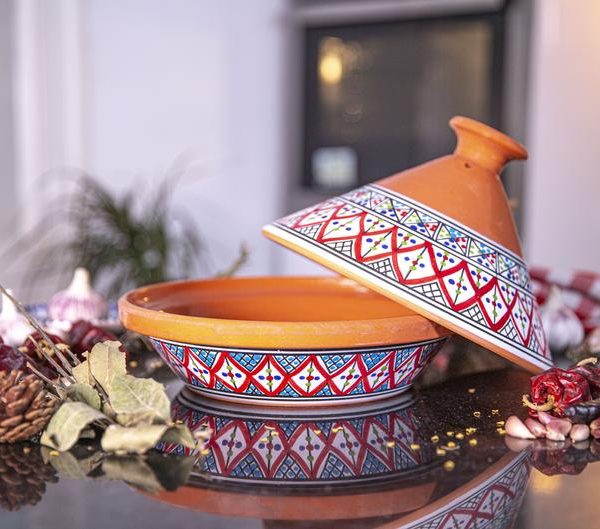
Our tagines range from plain, functional clay pots built purely for the stovetop, to hand-painted decorative pieces from artisans like Naman in Djerba, whose brushwork follows design traditions specific to that island’s pottery. Some are sized for everyday cooking, others for serving a finished dish at the table with real presence.
Choosing a Tagine
If you’re new to tagine cooking, start with an unglazed or lightly glazed clay pot and season it before first use: soak the base and lid in water for a few hours, then bring it up to heat gradually rather than placing it directly on high heat. This conditions the clay and helps prevent cracking. From there, tagines are forgiving cookware — well suited to weeknight dinners as much as slow weekend cooking.
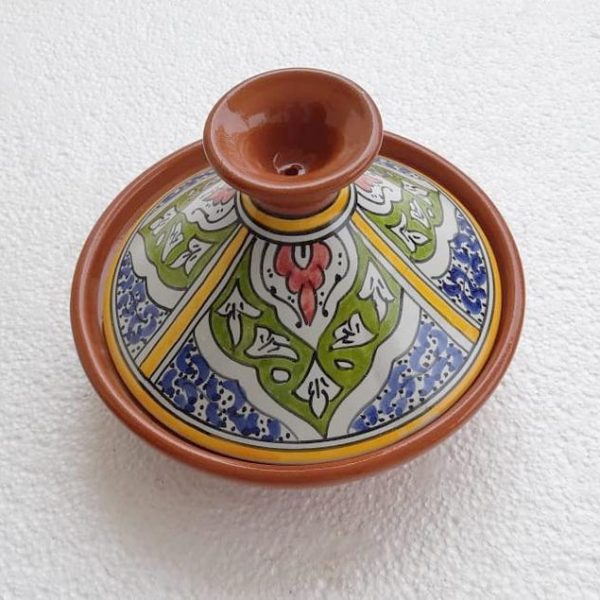
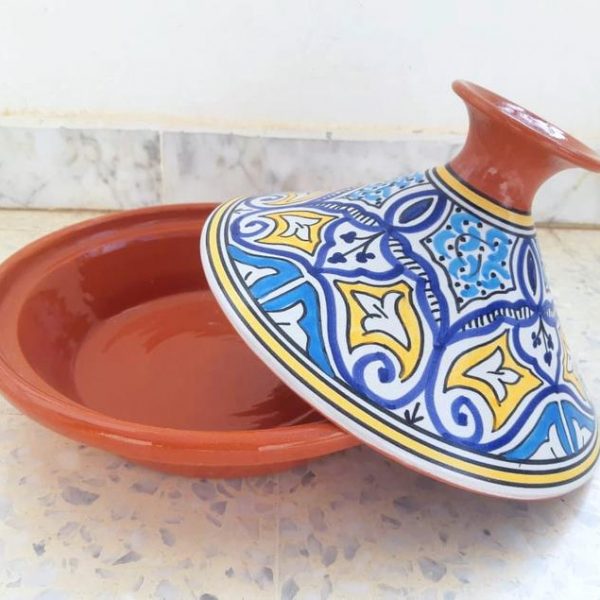
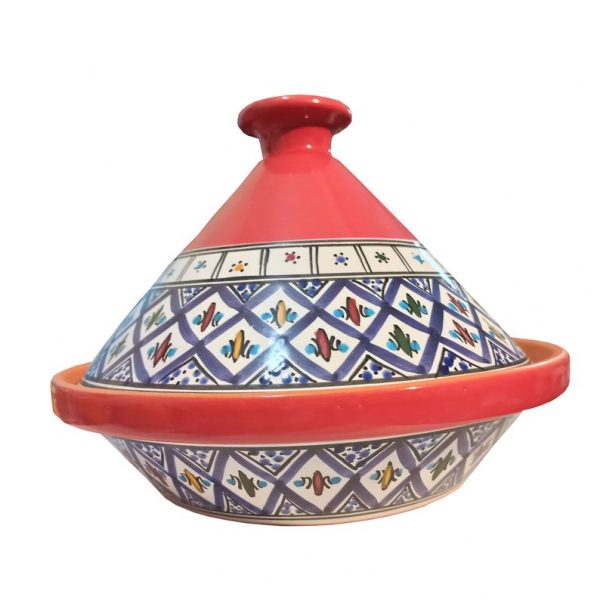
If you’re looking for something closer to a serving piece or a decorative centerpiece for a bohemian kitchen, our hand-painted and colourful tagines are built with that in mind, and hold up just as well going straight from stovetop to table.
Teapots and the Tea Ritual
Alongside our tagines, this collection includes the teapots and serving pieces built for Moroccan mint tea — a tradition that’s as much about hospitality as it is about the tea itself. Our brass and silver-plated teapots follow the traditional shape built for the ceremonial high pour, which aerates the tea and builds its characteristic foam. Paired with a set of small tea glasses, they’re designed for the frequent small pours that define the ritual, rather than one large cup poured once.
Materials and Craftsmanship
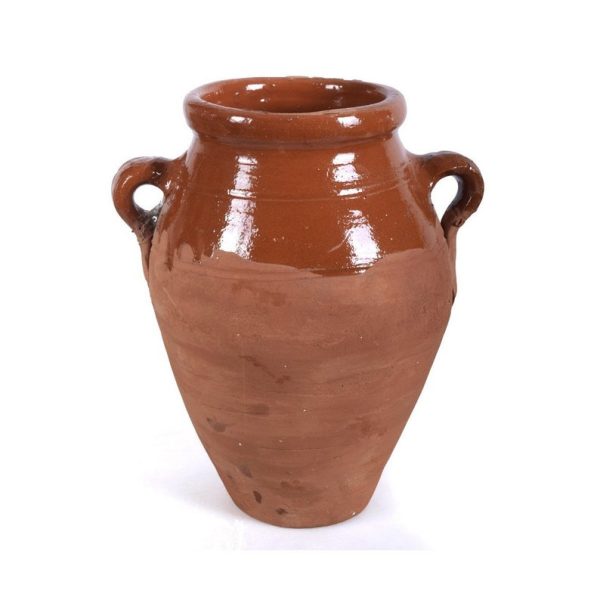
Every piece in this collection is made by hand using traditional materials: fired clay for the tagines, hand-hammered and embossed brass or silver plating for the teapots and trays. Because each piece passes through an artisan’s hands rather than a factory line, expect small, natural variation from piece to piece — a sign of genuine handmade work, not a flaw.
Sizing a Tagine to Your Table
Tagines in this collection range from smaller individual or two-person pots up to large family-style sizes built for serving four or more. As a rough guide, a smaller tagine suits a couple cooking a weeknight meal, while a large tagine is better suited to gatherings or a household that cooks in batches. If you’re buying your first one, a medium size is usually the most versatile starting point.
Caring for Your Tagine
Clay cookware rewards a little patience. Beyond seasoning it before first use, avoid sudden temperature changes — don’t move a hot tagine onto a cold surface, and let it cool gradually rather than rinsing it under cold water straight off the heat. Hand wash rather than using a dishwasher, and a well-cared-for clay tagine will only improve with age as it becomes more heat-resistant over repeated use.
Looking for more of the kitchen and table? Browse our Moroccan Pottery collection for bowls and everyday ceramics, or our Moroccan Teapot collection for the full range of tea service pieces.
Frequently asked questions
Can I cook in every tagine?
No. Only cook in a tagine made for cooking; hand-painted serving tagines are for the table. Each product page says which it is.
How do I season a clay tagine?
Before the first use, rub the inside with olive oil and heat it gently to dry it out.
Can I use a tagine on the stove?
Yes, a cooking tagine on low heat with a heat diffuser between the hob and the pot.
How long does shipping take?
Shipping is free. Orders ship from Morocco by standard shipping and are processed in about 4 days on average; delivery takes 10–15 working days to most of the USA and Europe, and 12–21 days elsewhere. Import taxes or duties may apply in some countries. See our shipping policy.
Can I return an item?
Yes. Email us within 5 days of receiving your order, then return the item undamaged within 14 days for a full refund; return shipping is paid by the buyer. If anything arrives damaged, contact us within 14 days. See our return policy.