
Boucherouite Rugs
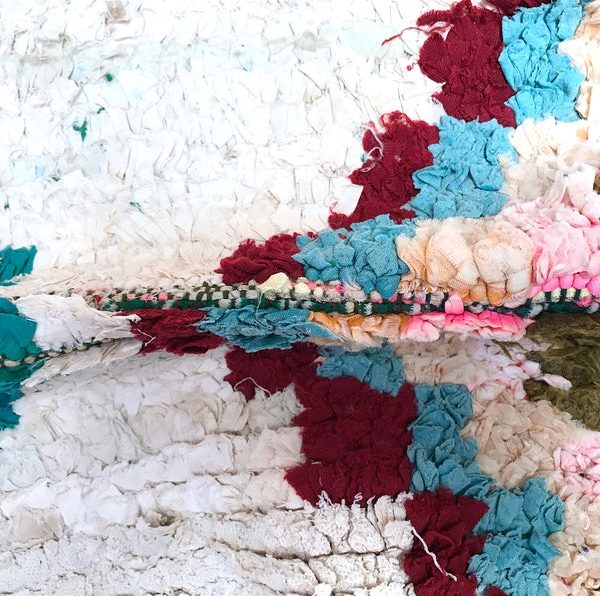
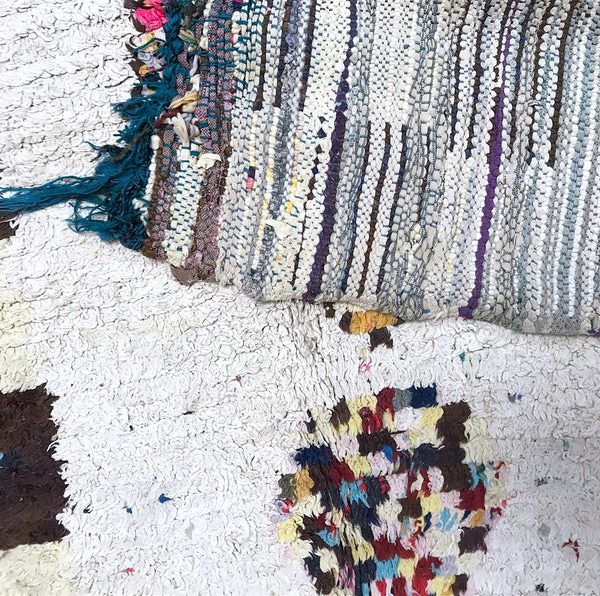
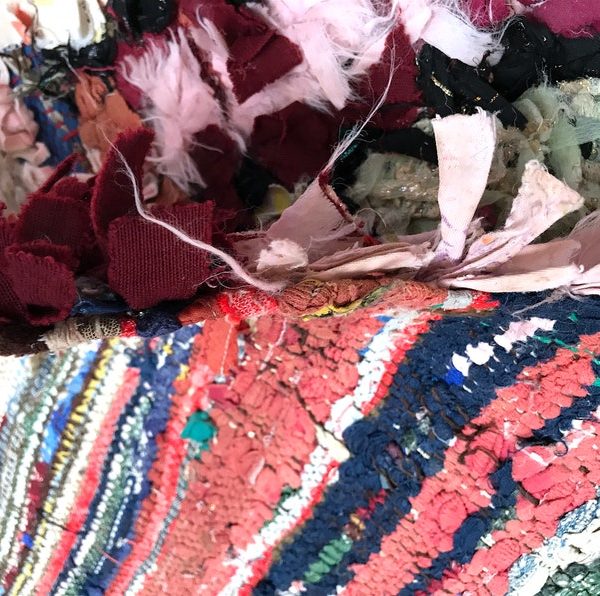
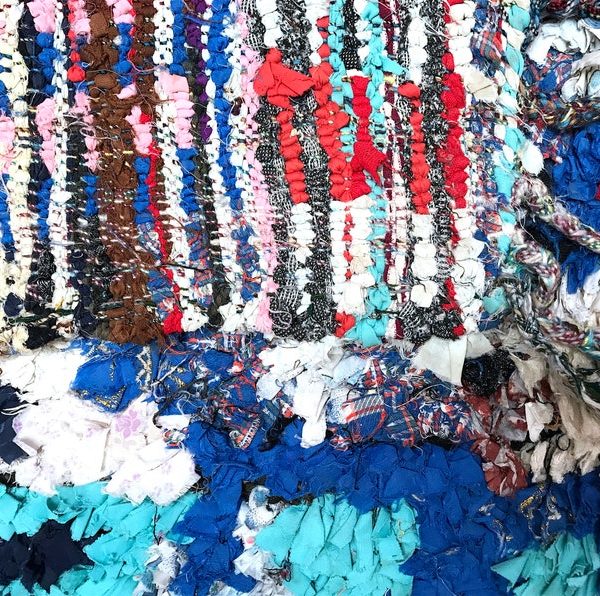
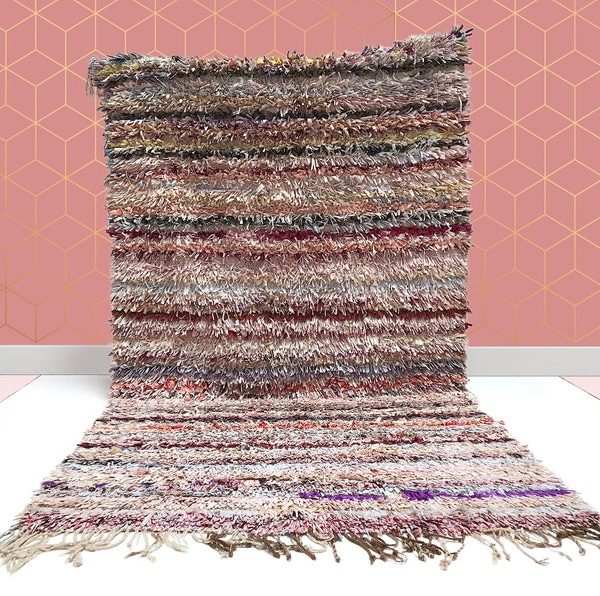
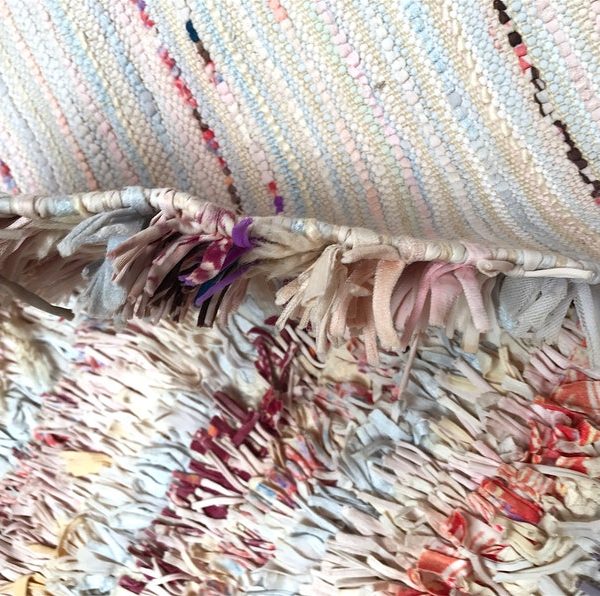
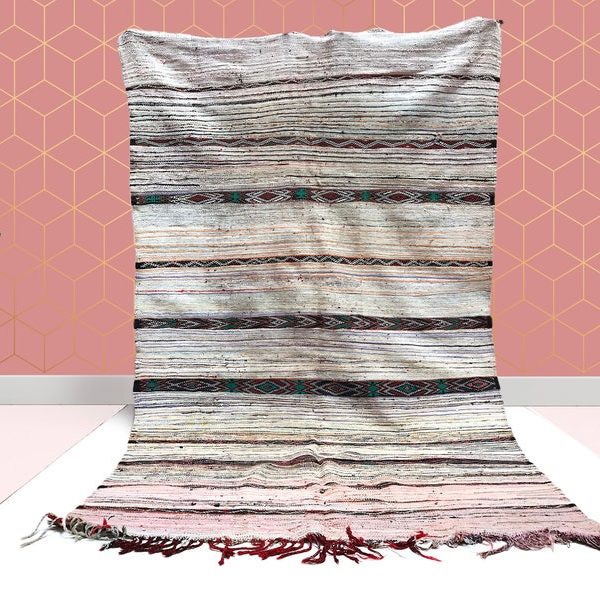
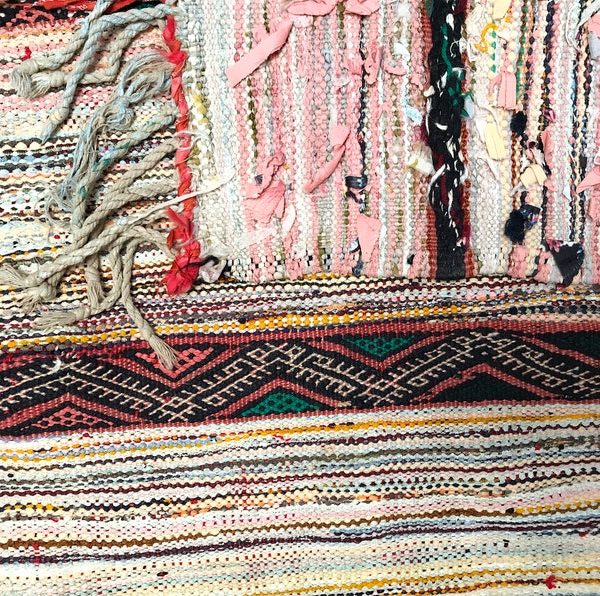
Boucherouite rugs are Moroccan rag rugs, woven by Berber women from repurposed fabric, old clothing and textile offcuts instead of wool. Because the material is whatever fabric was at hand, every Boucherouite rug has its own colors and texture — closer to textile art than to a traditional carpet.
More rug styles: Beni Ourain · Azilal · Boujad · Beni Mguild · Kilim · All Moroccan rugs
-
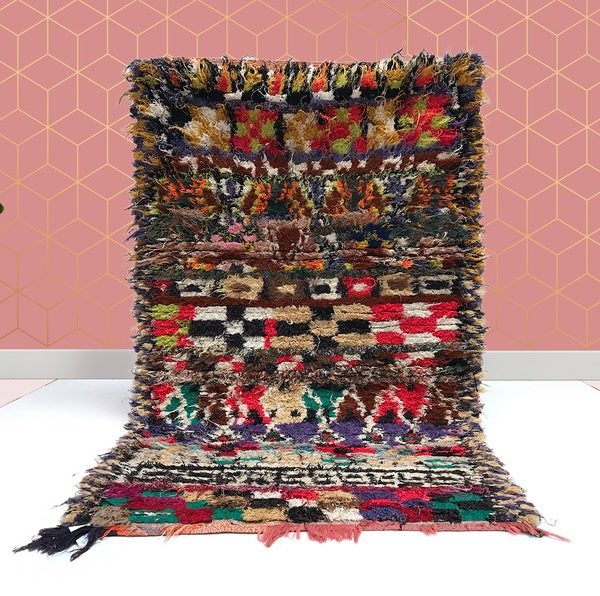
 -18% Off
Original price was: $476.$390Current price is: $390.
-18% Off
Original price was: $476.$390Current price is: $390.The Boucherouite rug is undoubtedly the busiest carpet model in history! This carpet is originally made from scrap fabrics recovered and recycled by weavers (wool, cotton, upholstery, djellabas, caftans). A real explosion of colors, the Boucherouïte brings a bohemian and offbeat touch to
- State:Vintage
- Manufacturing: By hand
- Materials: Organic Wool of sheep
- Condition: Perfect, clean, no damage, no stain at all
- Size:92 cm x 153 cm / 3.01 ft x 3.01 ft
🌟 Free worldwide shipping
Check Other Design Her : Boucherouite Moroccan Rug
-
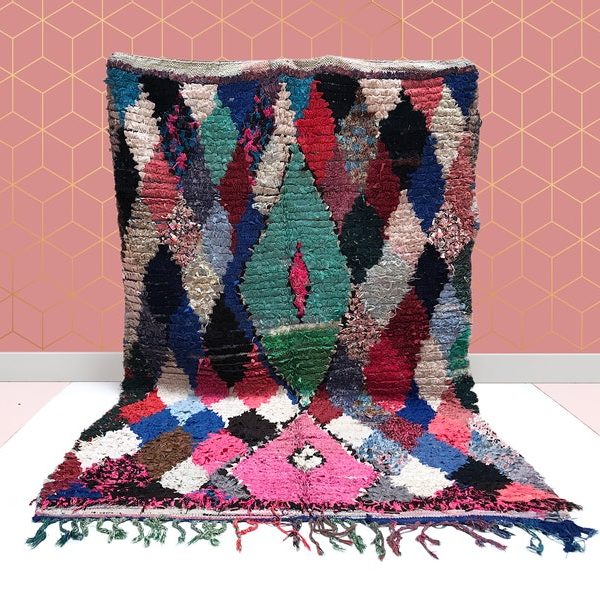 -11% Off
Original price was: $760.$680Current price is: $680.
-11% Off
Original price was: $760.$680Current price is: $680.The Boucherouite rug is undoubtedly the busiest carpet model in history! This carpet is originally made from scrap fabrics recovered and recycled by weavers (wool, cotton, upholstery, djellabas, caftans). A real explosion of colors, the Boucherouïte brings a bohemian and offbeat touch to
- State:Vintage
- Manufacturing: By hand
- Materials: Organic Wool of sheep
- Condition: Perfect, clean, no damage, no stain at all
- Size:131 cm x 213 cm / 4.29 ft x 6.98 ft
🌟 Free worldwide shipping
Check Other Design Her : Boucherouite Moroccan Rug
-
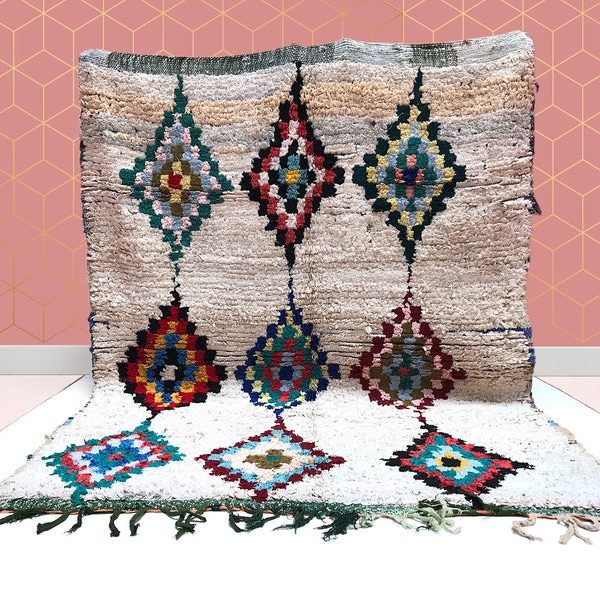 -14% Off
Original price was: $799.$689Current price is: $689.
-14% Off
Original price was: $799.$689Current price is: $689.The Boucherouite rug is undoubtedly the busiest carpet model in history! This carpet is originally made from scrap fabrics recovered and recycled by weavers (wool, cotton, upholstery, djellabas, caftans). A real explosion of colors, the Boucherouïte brings a bohemian and offbeat touch to
- State:Vintage
- Manufacturing: By hand
- Materials: Organic Wool of sheep
- Condition: Perfect, clean, no damage, no stain at all
- Size: 156 cm x 212 cm / 5.11 ft x 6.95 ft
🌟 Free worldwide shipping
Check Other Design Her : Boucherouite Moroccan Rug
-
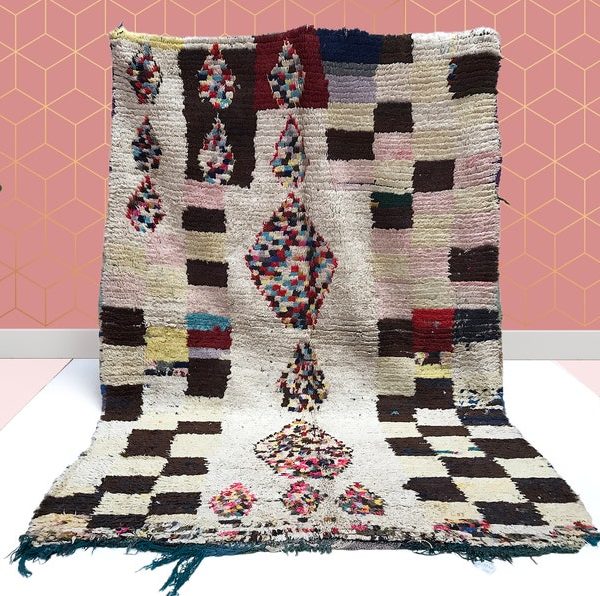 -14% Off
Original price was: $780.$670Current price is: $670.
-14% Off
Original price was: $780.$670Current price is: $670.The Boucherouite rug is undoubtedly the busiest carpet model in history! This carpet is originally made from scrap fabrics recovered and recycled by weavers (wool, cotton, upholstery, djellabas, caftans). A real explosion of colors, the Boucherouïte brings a bohemian and offbeat touch to
- State:Vintage
- Manufacturing: By hand
- Materials: Organic Wool of sheep
- Condition: Perfect, clean, no damage, no stain at all
- Size: 132 cm x 187 cm / 4.33 ft x 6.13 ft
🌟 Free worldwide shipping
Check Other Design Her : Boucherouite Moroccan Rug
-
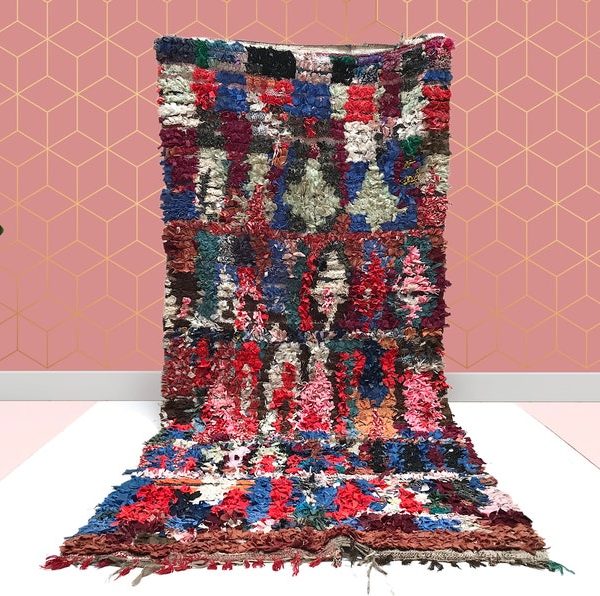 -13% Off
Original price was: $776.$675Current price is: $675.
-13% Off
Original price was: $776.$675Current price is: $675.The Boucherouite rug is undoubtedly the busiest carpet model in history! This carpet is originally made from scrap fabrics recovered and recycled by weavers (wool, cotton, upholstery, djellabas, caftans). A real explosion of colors, the Boucherouïte brings a bohemian and offbeat touch to
- State:Vintage
- Manufacturing: By hand
- Materials: Organic Wool of sheep
- Condition: Perfect, clean, no damage, no stain at all
- Size: 116 cm x 261 cm / 3.80 ft x 8.56 ft
🌟 Free worldwide shipping
Check Other Design Her : Boucherouite Moroccan Rug
-
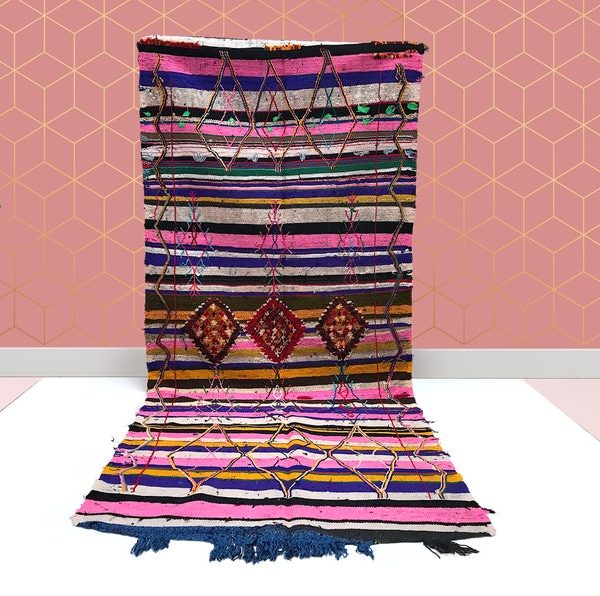 -10% Off
Original price was: $757.$678Current price is: $678.
-10% Off
Original price was: $757.$678Current price is: $678.The Boucherouite rug is undoubtedly the busiest carpet model in history! This carpet is originally made from scrap fabrics recovered and recycled by weavers (wool, cotton, upholstery, djellabas, caftans). A real explosion of colors, the Boucherouïte brings a bohemian and offbeat touch to
- State:Vintage
- Manufacturing: By hand
- Materials: Organic Wool of sheep
- Condition: Perfect, clean, no damage, no stain at all
- Size: 130 cm x 260 cm / 4.26 ft x 8.53 ft
🌟 Free worldwide shipping
Check Other Design Her : Boucherouite Moroccan Rug
-
-17% Off
Original price was: $865.$720Current price is: $720.
The Boucherouite rug is undoubtedly the busiest carpet model in history! This carpet is originally made from scrap fabrics recovered and recycled by weavers (wool, cotton, upholstery, djellabas, caftans). A real explosion of colors, the Boucherouïte brings a bohemian and offbeat touch to
- State:Vintage
- Manufacturing: By hand
- Materials: Organic Wool of sheep
- Condition: Perfect, clean, no damage, no stain at all
- Size: 114 cm x 200 cm / 3.74 ft x 6.56 ft
🌟 Free worldwide shipping
Check Other Design Her : Boucherouite Moroccan Rug
-
-17% Off
Original price was: $890.$740Current price is: $740.
The Boucherouite rug is undoubtedly the busiest carpet model in history! This carpet is originally made from scrap fabrics recovered and recycled by weavers (wool, cotton, upholstery, djellabas, caftans). A real explosion of colors, the Boucherouïte brings a bohemian and offbeat touch to
- State:Vintage
- Manufacturing: By hand
- Materials: Organic Wool of sheep
- Condition: Perfect, clean, no damage, no stain at all
- Size: 97 cm x 230 cm / 3.18 ft x 7.54 ft
🌟 Free worldwide shipping
Check Other Design Her : Boucherouite Moroccan Rug
-
-13% Off
Original price was: $840.$730Current price is: $730.
The Boucherouite rug is undoubtedly the busiest carpet model in history! This carpet is originally made from scrap fabrics recovered and recycled by weavers (wool, cotton, upholstery, djellabas, caftans). A real explosion of colors, the Boucherouïte brings a bohemian and offbeat touch to
- State:Vintage
- Manufacturing: By hand
- Materials: Organic Wool of sheep
- Condition: Perfect, clean, no damage, no stain at all
- Size: 147 cm x 256 cm / 4.82 ft x 8.39 ft
🌟 Free worldwide shipping
Check Other Design Her : Boucherouite Moroccan Rug
About Boucherouite rugs
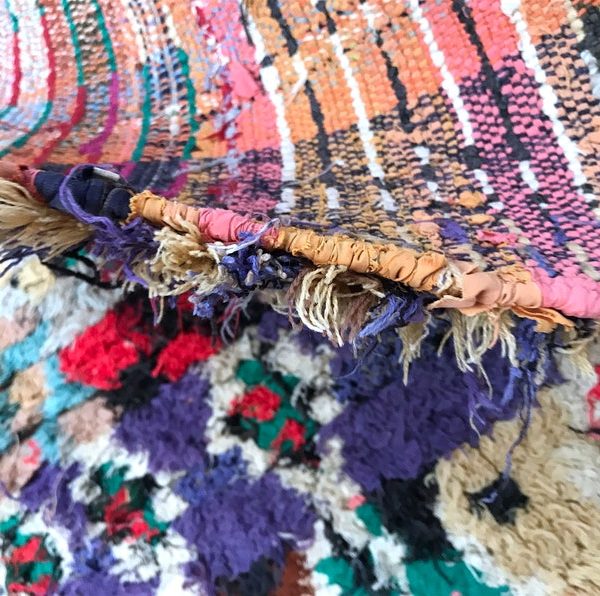
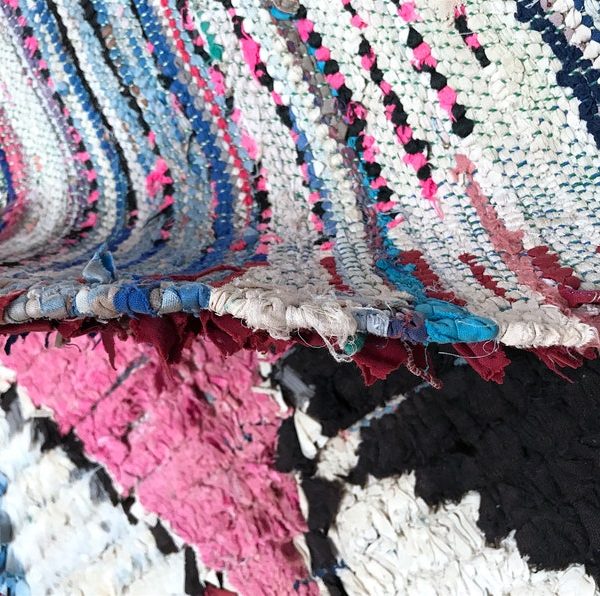
Boucherouite rugs stand apart from every other rug in this collection in one key way: they’re not woven from wool. The name comes from the Moroccan Arabic for “scraps” or “rags,” and that’s exactly what these rugs are made from — repurposed fabric, old clothing, and textile offcuts, woven together by Berber women originally out of resourcefulness rather than for the design market.
That origin is exactly what makes each Boucherouite rug genuinely one of a kind. Because the raw material is whatever fabric was available rather than a consistent stock of dyed wool, no two boucherouite rugs share the same color combination or texture — they’re closer to textile collage than traditional carpet weaving, vivid, eclectic, and impossible to replicate exactly.
From Practical Craft to Design Object
What began as a practical, resourceful craft has become one of the most sought-after styles in bohemian interior design precisely because of that individuality. A boucherouite rug reads as art as much as floor covering, and works equally well as a rug, a wall hanging, or thrown over a chair or bench.
Choosing and Caring for a Boucherouite Rug
Because these rugs are made of mixed fabric rather than uniform wool, treat them more gently than a pile carpet: light vacuuming or shaking out, spot-clean rather than deep-soak, and avoid harsh wringing if you do wash a smaller piece. Their light weight and flat-to-low pile make them easy to move between a floor, a wall, or a runner if you want to change up a room without committing to one placement.
See also Beni Mguild Rug, Kilim Moroccan Rugs, Moroccan Poufs, and Moroccan Lamps.
Frequently asked questions
What is a Boucherouite rug made of?
Recycled fabric, old clothing and textile offcuts rather than wool. The name comes from the Moroccan Arabic for "scraps" or "rags".
Are any two Boucherouite rugs the same?
No. The colors and textures depend on the fabric each weaver had, so every rug is one of a kind.
Can I hang a Boucherouite rug on the wall?
Yes — they work as a rug, a wall hanging or a throw.
How long does shipping take?
Shipping is free. Orders ship from Morocco by standard shipping and are processed in about 4 days on average; delivery takes 10–15 working days to most of the USA and Europe, and 12–21 days elsewhere. Import taxes or duties may apply in some countries. See our shipping policy.
Can I return a rug?
Yes. Email us within 5 days of receiving your order, then return the rug undamaged within 14 days for a full refund; return shipping is paid by the buyer. If anything arrives damaged, contact us within 14 days. See our return policy.